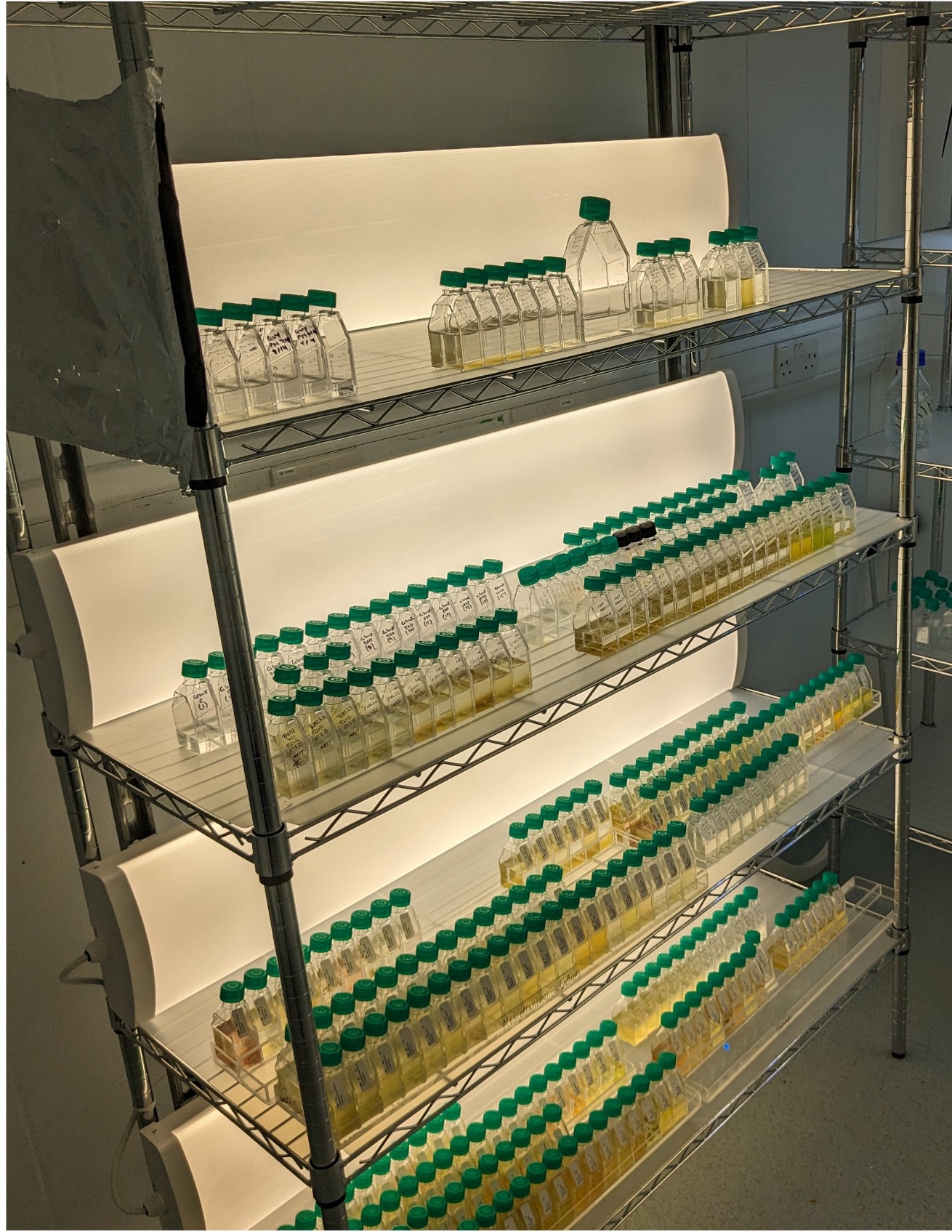
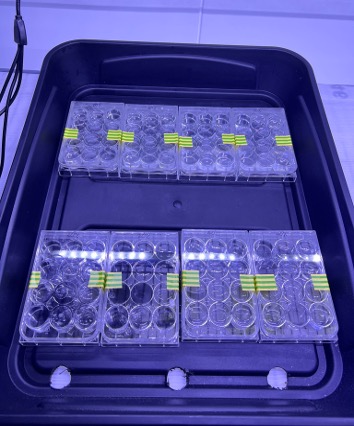
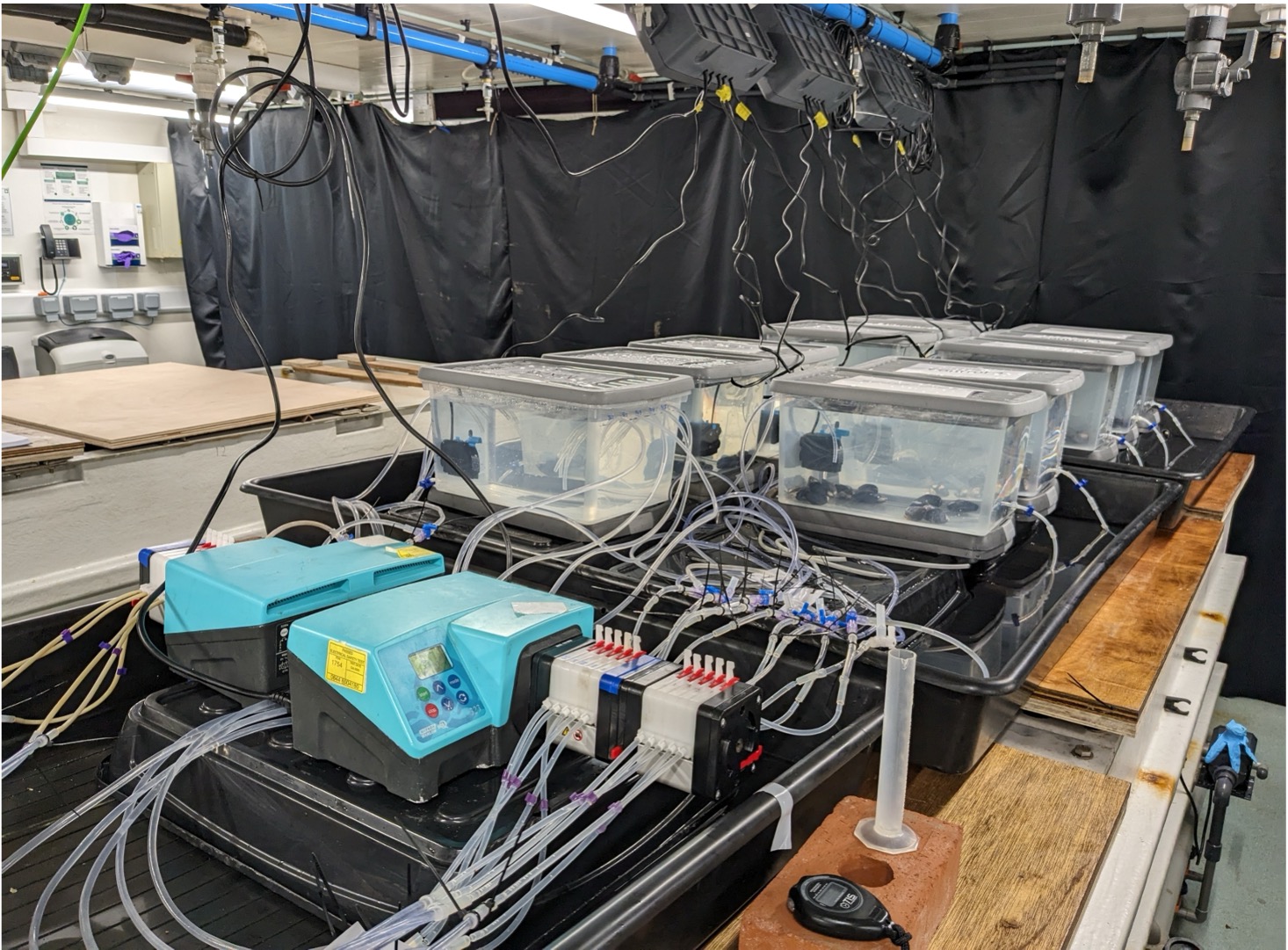
We ran experiments at the Plymouth Marine Laboratory and the Marine Biological Association to better understand how some marine plants and animals respond to low-carbon seawater. The short-term experiments (2-6 days) studied phytoplankton, zooplankton and blue mussels exposed to different concentrations of low-carbon seawater.
Links to the our research papers as they gets published:.- Review of potential marine ecosystem impacts associated with low carbon seawater
- Impacts of low carbon seawater on mussels (currently being peer reviewed)
- Impacts of low carbon seawater on phytoplankton (final stages of writeup, link coming soon)
- Impacts of low carbon seawater on zooplankton (early stages of writeup, link coming soon)
- Overview of results in PhD thesis (link coming soon)